
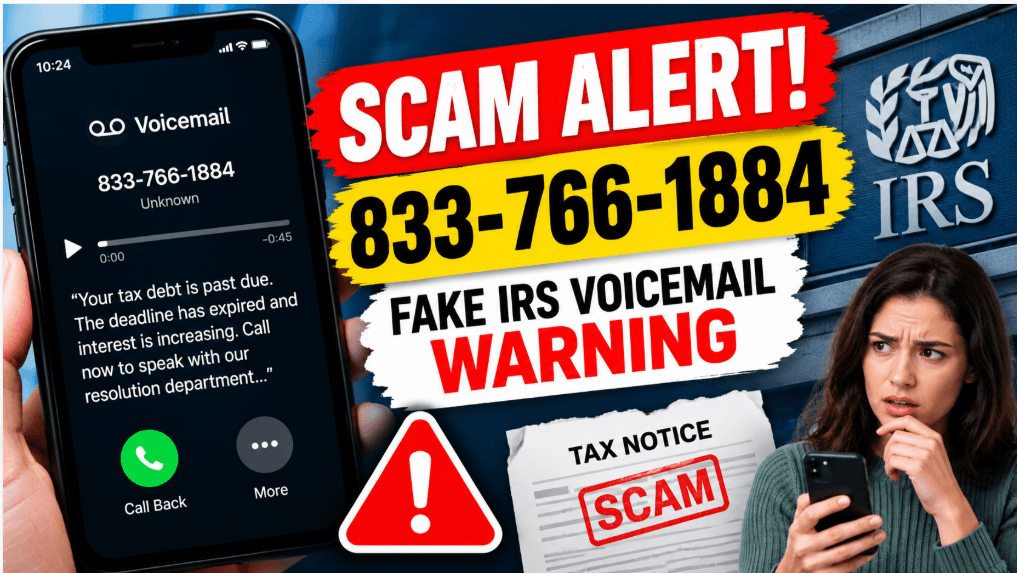
Receiving a voicemail about overdue taxes can be stressful, especially when the message claims that a deadline has passed and additional interest is accumulating. Recently reported messages associated with 833-766-1884 have raised concerns because they urge recipients to call back about tax-resolution options and stopping further collection activity.
The message may sound official, but its wording does not prove that the caller represents the Internal Revenue Service (IRS). Unexpected calls that create urgency around tax payments or promise help with tax debt deserve careful attention. Before returning the call or sharing personal information, it is important to understand the warning signs and verify any genuine tax obligations through official channels.
What Is the 833-766-1884 Phone Number?

The number 833-766-1884 has been reported in connection with a voicemail about past-due taxes and tax-resolution services. The recording reportedly mentions an expired extension deadline, increasing interest, and options for addressing the supposed tax problem.
It encourages recipients to call the number to discuss a resolution program. However, the message does not establish the caller’s identity or independently verify that the recipient owes money.
A toll-free number beginning with 833 is not automatically associated with a government agency. Legitimate businesses and potentially deceptive callers can both use toll-free numbers.
Reports about this number should therefore be treated as a warning rather than definitive proof of the identity of the person or organization behind every call. Phone numbers can also be spoofed, making independent verification especially important.
How Does the Fake IRS Voicemail Work?
The reported voicemail follows a pattern commonly associated with tax-related scam calls. It begins by referring to overdue taxes, then introduces urgency by mentioning a passed deadline and accumulating interest.
The caller encourages the recipient to contact a supposed resolution department to discuss ways to reduce interest or prevent additional collection activity.
This approach can make people worry that ignoring the message will lead to financial penalties. Someone who is unsure about their tax status may call back simply to find out whether the warning is genuine.
However, an unexpected voicemail does not establish a tax debt. It also does not demonstrate that the caller has authority to negotiate with the IRS or stop collection procedures.
The safest response is to check your tax situation independently instead of following instructions from an unverified caller.
Warning Signs Associated With 833-766-1884
Several aspects of the reported message deserve attention.
Urgent language: References to expired deadlines and increasing interest can pressure recipients into acting before checking the facts.
Unverified tax claims: The voicemail does not independently establish the recipient’s identity, tax year, outstanding balance, or actual account status.
Promises of tax relief: References to reducing interest or stopping collections can make the caller appear helpful, even though their identity and authority remain unconfirmed.
A direct callback request: The message encourages recipients to use the supplied number rather than first verifying the situation through an official agency.
Potential requests for sensitive information: If a follow-up conversation asks for a Social Security number, banking information, tax documents, or payment, do not provide anything until you have independently verified the recipient.
These warning signs do not identify the caller conclusively, but they provide good reasons to avoid responding without verification.
Is 833-766-1884 an IRS Scam?
The reported voicemail has characteristics associated with tax-related scam and misleading tax-relief calls. Nevertheless, the available information does not conclusively establish who controls the number or prove that every call displaying it comes from the same source.
The IRS warns that scammers may impersonate tax officials, create a false sense of urgency, and pressure people to reveal personal or financial information.
According to the IRS, initial contact about a tax matter generally comes through a letter or notice delivered by mail. IRS employees may make legitimate calls in certain circumstances, but the agency does not leave prerecorded, urgent or threatening messages demanding immediate action.
The distinction matters because a real tax obligation and a fraudulent phone call are two separate issues. You should not assume you owe money simply because a voicemail says so, but you should still investigate any genuine tax concern through official channels.
You can review the IRS’s guidance at How to Know It’s the IRS.
What Happens If You Call Back?
The reported recording asks recipients to call back to discuss a tax-resolution program. The available information does not establish exactly what every caller will experience after making contact.
However, unsolicited tax-relief calls can lead to sales pitches, requests for sensitive personal information, or offers of paid assistance with tax debt.
Some businesses legitimately help taxpayers understand their options, but an unfamiliar caller should not automatically be trusted simply because they mention the IRS.
Before agreeing to any service, verify the business, check the qualifications of the person offering assistance, and request a written explanation of the services and fees.
Never share financial credentials, send payment, or authorize withdrawals solely because a caller claims that a tax deadline is approaching.
What Should You Do If You Receive This Voicemail?
If you receive a message from 833-766-1884 about overdue taxes, follow these precautions:
- Do not rush to call back. The voicemail does not establish that you owe taxes or that the caller represents the IRS.
- Avoid sharing personal information. Do not provide your Social Security number, banking details, tax records, or passwords to an unverified caller.
- Check your tax status independently. Visit IRS.gov directly and use your official online account or verified contact information.
- Save the voicemail details. Keep the phone number, message, date, and any other information that may help if you report the incident.
- Block unwanted calls if appropriate. You can block the number on your phone, although this may not prevent calls from other numbers.
- Report suspicious contact. The IRS provides instructions for reporting suspected impersonation and tax-related scams. You can also report deceptive calls to the Federal Trade Commission.
If you have already shared banking information or made a payment, contact your financial institution promptly using its official phone number or app.
Can the IRS Really Contact You by Phone?
Yes. The IRS can contact taxpayers by telephone in certain circumstances, including after correspondence has been sent or when discussing an existing matter.
However, an unexpected call claiming that you must act immediately should be treated cautiously. The IRS does not demand immediate payment through gift cards, cryptocurrency, or prepaid cards, nor does it threaten arrest to force payment.
If a caller claims to represent the IRS, end the conversation if you feel pressured and verify the claim independently. Do not rely on a caller ID display, a claimed employee number, or a callback number supplied during the call.
You can review legitimate tax notices and account information through the official IRS website.
Frequently Asked Questions
Is 833-766-1884 a scam number?
The number has been associated with reports of a suspicious tax-resolution voicemail. The reported message contains warning signs, but the identity of the caller cannot be conclusively established from the number alone.
Should I call 833-766-1884 back?
It is safer not to return the call based solely on the voicemail. If you are concerned about unpaid taxes, contact the IRS using information obtained independently from its official website.
Can a fake IRS voicemail mean I owe back taxes?
No. The voicemail itself does not prove that you have an outstanding tax balance. Check your official account and any genuine tax notices to determine your status.
What if I already called the number?
If you only called and did not disclose information or make a payment, the risk may be limited. If you shared sensitive details or financial information, contact the relevant bank or institution and take appropriate identity-protection steps.
Where can I report a suspected IRS scam?
You can consult the IRS’s official fraud-reporting guidance for instructions on reporting suspicious tax-related calls.
Final Verdict
The voicemail associated with 833-766-1884 raises legitimate concerns because it uses urgent tax-related language and encourages recipients to contact an unverified resolution service. Its claims about overdue taxes, interest, and collection activity should not be accepted without independent confirmation.
Although the available evidence does not conclusively identify the number’s operator, the safest approach is to avoid sharing personal information or making payments in response to the message. Verify any tax obligations through IRS.gov, keep records of suspicious communications, and report suspected impersonation through appropriate official channels.
Remember: A convincing voicemail is not proof of a tax debt. Verify first, protect your information, and never let an unexpected caller pressure you into a financial decision.

Nikhil Sharma is the author and researcher behind Review Trails, where he shares shopping website reviews, product insights, and scam or legit website analysis. He focuses on providing honest, easy-to-understand information that helps readers make safer and smarter online purchasing decisions.