
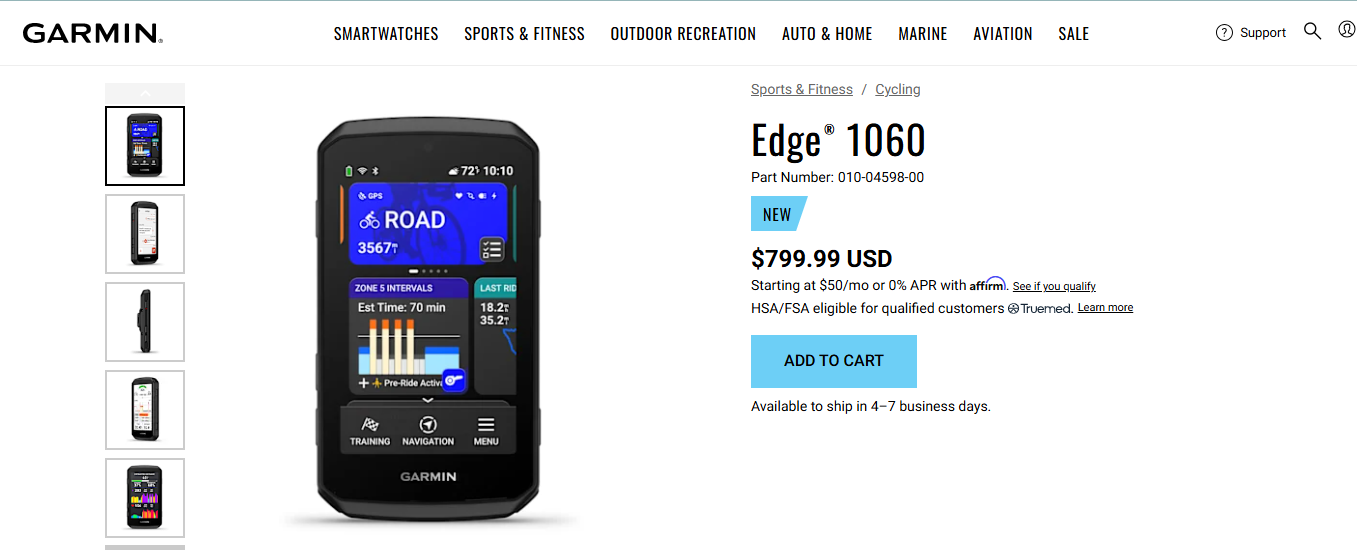
The Garmin Edge 1060 is Garmin’s premium GPS cycling computer, introduced in October 2026 as the successor to the Edge 1050. It combines a large colour touchscreen, advanced navigation, cycling-performance analytics, and new hands-free voice controls in a device designed for road cyclists, gravel riders, and mountain bikers.
The most notable addition is voice control, which lets riders ask for route guidance, check ride statistics, and report road hazards without needing to operate the touchscreen. Garmin has also enhanced route planning, group-riding features, and connectivity.
But with a US suggested retail price of $799.99, the Edge 1060 is a serious investment. Is it a meaningful upgrade for existing Garmin owners, or is an older Edge model sufficient?
Garmin Edge 1060: Key Specifications
| Specification | Details |
|---|---|
| Display | 3.5-inch colour touchscreen |
| Resolution | 480 × 800 pixels |
| Weight | 142 g |
| Dimensions | 107 × 58.5 × 16.3 mm |
| Battery life | Up to 20 hours in demanding use; up to 60 hours in battery-saver mode |
| Water resistance | IPX7 |
| Storage | 64 GB internal storage |
| Connectivity | Bluetooth, ANT+, Wi-Fi |
| Navigation | GPS, GLONASS, Galileo, multi-band GNSS |
| Charging | USB-C |
| US launch price | $799.99 |
These specifications come from Garmin’s published product information and owner documentation. Actual battery life depends on settings, sensors, navigation, and connected accessories.
Design and Display
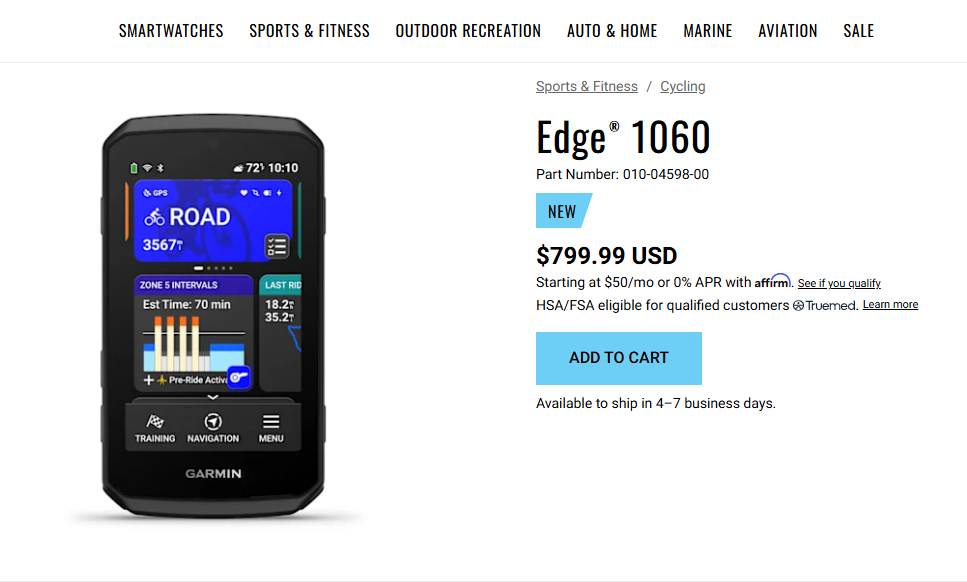
The Edge 1060 features a large 3.5-inch colour touchscreen, physical buttons, and a built-in speaker and microphone. Its combination of touch and button controls should be useful when riding in rain, wearing gloves, or navigating rough terrain.
The high-resolution display gives navigation maps, workout data, and route details plenty of room. This is particularly helpful when following unfamiliar roads or trails, where small junctions and subtle turns can be difficult to identify on smaller cycling computers.
At 142 grams, the Edge 1060 is relatively substantial compared with basic cycling computers, but its screen size and extensive feature set help explain the weight.
Garmin also gives users greater control over the home screen, allowing them to prioritize the information and widgets they use most frequently.
Voice Control: The Biggest New Feature
The standout feature is hands-free voice control, activated using the prompt “Okay, Garmin.”
Riders can use supported commands to request navigation, ask for statistics such as heart rate, change screens, or report hazards. The built-in speaker can read out navigation prompts and workout information, and it can function as a digital bike bell.
With a compatible smartphone connected, Garmin Messenger integration also allows riders to send and receive voice messages.
The practical benefit is straightforward: fewer reasons to take a hand off the handlebar to operate the computer. This could be especially helpful during group rides or when approaching complicated junctions.
However, voice recognition is not guaranteed to work perfectly in every situation. Wind noise, traffic, road conditions, and supported-language limitations can affect performance. Garmin’s announcement also notes that some functions require a compatible smartphone and Garmin Connect.
Navigation and Route Planning
Garmin has expanded the Edge 1060’s navigation capabilities with several features intended to make route planning more flexible.
Alternative route options
Rather than following a single suggested route, riders can view different options based on factors such as distance, estimated time, elevation, and bike type. This is useful when choosing between a quicker road route and a more scenic or challenging alternative.
Route previews
Before starting a course, riders can review information such as distance, estimated riding time, elevation, surface type, traffic, and reported road hazards.
This helps riders understand what lies ahead before committing to a route.
Up Ahead points of interest
The Up Ahead feature highlights selected points of interest, including cafés, public restrooms, and water stops. It can make long rides easier to plan, particularly when cycling through unfamiliar areas.
Free Flow Routing and hazard alerts
Free Flow Routing is designed to suggest routes with fewer stops, intersections, or slowdowns. The computer can also display reported hazards and road closures when the required smartphone connection and services are available.
These features could make the Edge 1060 particularly attractive to riders who explore new areas frequently. However, route quality still depends on map coverage, local data, and the accuracy of community-reported hazards.
Training and Performance Features
The Edge 1060 retains Garmin’s extensive cycling analytics, making it more than a navigation device.
Features include:
- Real-time stamina estimates.
- Training status, training load, and recovery-related insights.
- Cycling ability and course-demand analysis.
- Power Guide for pacing efforts on a course.
- Daily suggested workouts and adaptive Garmin Coach cycling plans.
- ClimbPro ascent information.
- Workout guidance and performance tracking.
Some measurements require compatible equipment, such as a heart-rate monitor or power meter. Training metrics are estimates intended to help interpret performance; they are not direct measurements of every aspect of fitness.
For serious cyclists, these tools can be valuable for planning training blocks, managing effort on climbs, and understanding how a route’s difficulty compares with their abilities.
Casual riders who mainly want speed, distance, and navigation may not benefit enough from the additional analytics to justify the premium price.
GroupRide, Safety, and Connectivity
The Edge 1060 supports GroupRide features including live locations, in-ride messaging, incident alerts, and group competitions. The new detection feature can help compatible devices identify a nearby active GroupRide.
Other capabilities include LiveTrack location sharing, incident detection, a PIN-protected bike alarm, and compatibility with Garmin Varia radar and lights. Riders can also pair a compatible inReach device for communication beyond ordinary cellular coverage.
The computer supports Bluetooth, ANT+, and Wi-Fi, and can synchronize routes and workouts with Garmin Connect and compatible third-party platforms. Garmin also includes reverse charging, allowing the Edge to provide power to certain compatible devices using a suitable USB-C cable. This is intended for emergency use, not for charging accessories while riding.
Availability of some safety, messaging, and weather features depends on compatible devices, smartphone connectivity, regional support, and service settings.
Battery Life
Garmin rates the Edge 1060 for up to 20 hours under demanding use and up to 60 hours in battery-saver mode.
That range makes it suitable for many training rides, long-distance cycling, and some endurance events. Nevertheless, maximum figures are not guaranteed in ordinary use. High display brightness, continuous navigation, connected sensors, and frequent wireless activity can increase power consumption.
Riders planning multi-day adventures should consider their expected daily riding time, charging opportunities, and preferred settings rather than relying solely on the headline battery figure.
Pros and Cons
Pros
- Large, high-resolution colour display.
- New hands-free voice control and voice messaging.
- Flexible route options and enhanced route previews.
- Comprehensive training and performance analytics.
- GroupRide, LiveTrack, incident detection, and Varia compatibility.
- Up to 60 hours of battery life in battery-saver mode.
- Wi-Fi map management and 64 GB of internal storage.
Cons
- Premium $799.99 US launch price.
- Many advanced features may be unnecessary for recreational cyclists.
- Voice control depends on riding conditions and supported languages.
- Some functions require a compatible smartphone or additional sensors.
- Maximum battery-life claims depend on operating mode and settings.
Garmin Edge 1060 vs. Edge 1050
The Edge 1060 builds on the Edge 1050 rather than changing the entire cycling-computer concept. Its most prominent additions are voice control, a microphone and speaker for voice messaging, expanded navigation options, and reverse charging.
For owners of an Edge 1050 that already meets their needs, the upgrade may not be essential. The new functions are most compelling for riders who frequently navigate unfamiliar routes, communicate during group rides, or want to minimize touchscreen interaction while cycling.
Owners of older devices may find the larger display, current navigation features, and broader training tools more compelling.
Price and Value for Money
Garmin announced a suggested retail price of $799.99 in the United States. BikeRadar reported UK pricing of £699.99 and eurozone pricing of €799. Prices, availability, taxes, and regional bundles may vary.
At this price, the Edge 1060 is best suited to committed cyclists who will use its navigation, training, connectivity, and safety features regularly.
If you mainly need reliable GPS tracking, speed, distance, and straightforward navigation, a less expensive model may offer better value. Garmin’s Edge 850 and Edge 1050 are worth comparing before purchasing, particularly if you do not need the new voice features.
Frequently Asked Questions
Is the Garmin Edge 1060 worth buying?
It may be worth the investment for serious cyclists who want premium navigation, detailed performance analytics, and hands-free voice controls. Recreational riders may be better served by a less expensive model.
How long does the battery last?
Garmin advertises up to 20 hours in demanding use and up to 60 hours in battery-saver mode. Real-world endurance varies with settings and usage.
Is it waterproof?
The device carries an IPX7 water-resistance rating, which means it is designed to withstand incidental immersion under specified test conditions. It should still be handled and maintained according to Garmin’s instructions.
Does voice control work without a smartphone?
Some on-device commands may work independently, but messaging and certain connected navigation or safety functions require a compatible smartphone and supporting services. Check Garmin’s documentation for the specific feature you intend to use.
Is it suitable for mountain biking?
Yes. Garmin lists MTB-specific metrics, trail mapping, climb and descent tracking, and enduro/downhill features. The value of these functions depends on the rider’s discipline and compatible sensors or accessories.
Final Verdict
The Garmin Edge 1060 is a feature-rich premium cycling computer that combines a large colour display with advanced route planning, training analytics, group-riding tools, and newly introduced hands-free voice control.
Its most meaningful improvement is the ability to interact with the device using voice commands while keeping both hands on the handlebars. The enhanced route previews, alternative routing, and expanded hazard features also make it attractive for riders who regularly explore unfamiliar roads and trails.
The main drawbacks are its high price and the possibility that many of its advanced features will go unused by casual cyclists. Existing Edge 1050 owners should weigh the convenience of voice control against the cost of upgrading.
Overall verdict: The Garmin Edge 1060 looks like a compelling flagship for data-focused cyclists and frequent explorers. It is not an automatic upgrade for everyone, but riders who will use its navigation and hands-free features may find the premium worthwhile.

Nikhil Sharma is the author and researcher behind Review Trails, where he shares shopping website reviews, product insights, and scam or legit website analysis. He focuses on providing honest, easy-to-understand information that helps readers make safer and smarter online purchasing decisions.