
ZeroWattic is marketed as a compact plug-in electricity-saving device designed to stabilize electrical current, filter electrical interference, and potentially reduce household electricity bills. The product promises a convenient solution that requires no complicated installation or changes to everyday routines.
However, there is no convincing independent evidence that ZeroWattic significantly reduces household electricity consumption or monthly utility bills. Its advertised benefits should therefore be treated cautiously rather than accepted as proven results.
Some websites selling ZeroWattic also raise questions about seller transparency, product verification, and customer protection. Consumers should check the exact model’s electrical compatibility, safety certifications, and refund conditions before purchasing.
What Is ZeroWattic?
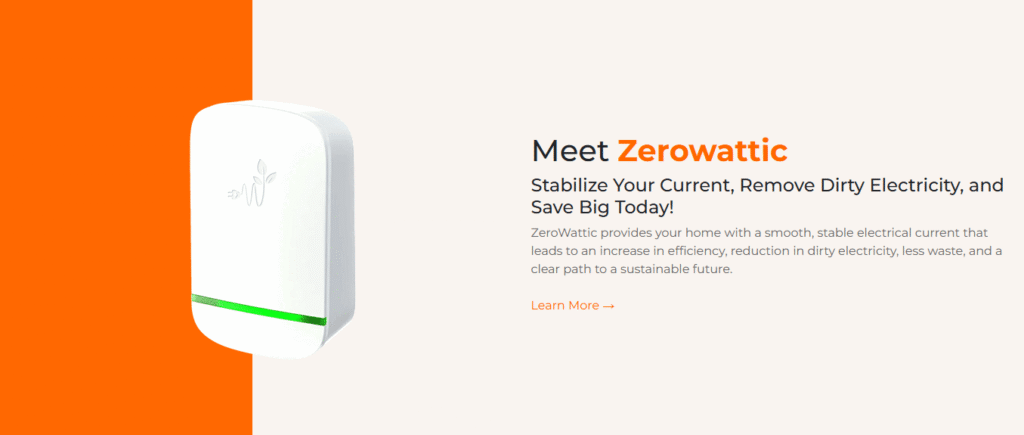
ZeroWattic is a plug-in power-management device promoted for residential and commercial use. It is designed to connect directly to an electrical outlet and is advertised as improving the quality and efficiency of household electricity.
According to its promotional material, the device helps manage electrical fluctuations, reduce unwanted electrical interference, and improve power usage.
The product is particularly appealing to people looking for ways to reduce electricity expenses without replacing appliances or changing their daily habits.
Its main advertised benefits include:
- Helping stabilize electrical current.
- Filtering unwanted electrical interference.
- Supporting household electrical equipment.
- Reducing supposedly wasted electricity.
- Potentially lowering monthly electricity bills.
- Offering convenient plug-in operation.
These are seller claims, not independently verified performance results.
How Does ZeroWattic Work?
ZeroWattic is promoted using concepts such as electrical stabilization, power-factor correction, and electrical filtering.
To understand these claims, it is important to distinguish between power quality and actual electricity consumption.
Power quality refers to characteristics such as voltage stability, electrical noise, and power factor. Electricity consumption refers to the actual energy used by appliances, generally measured in kilowatt-hours (kWh).
Some commercial and industrial electrical systems use properly engineered power-factor correction equipment. However, this does not mean a small plug-in device will automatically reduce electricity bills in an ordinary household.
The National Institute of Standards and Technology (NIST) explains why plug-in power-factor correction devices generally do not reduce residential electricity bills: household customers are typically charged for actual energy consumption rather than reactive power.
Therefore, ZeroWattic needs independent testing that demonstrates measurable reductions in household kWh consumption before its energy-saving claims can be considered reliable.
ZeroWattic Features and Specifications
| Product detail | Information |
|---|---|
| Product name | ZeroWattic |
| Product category | Plug-in power-management device |
| Main purpose | Electrical stabilization and filtering |
| Installation | Direct wall-outlet connection |
| Intended use | Residential and commercial |
| Advertised benefit | Potential electricity-bill savings |
| Independent testing | No convincing product-specific evidence established |
| Voltage compatibility | One seller FAQ specifies 110V North American systems |
Specifications may vary between websites using the ZeroWattic name. Buyers should verify the exact model and its technical documentation before ordering.
Does ZeroWattic Really Save Electricity?
This is the most important question for anyone considering the product.
At present, there is insufficient independent evidence to conclude that ZeroWattic meaningfully reduces household electricity consumption.
A device might affect an electrical characteristic without reducing the amount of energy an appliance uses. For example, changing power factor does not necessarily reduce the active electricity consumption recorded by a residential meter.
A reliable energy-saving test should measure electricity consumption before and after installation under comparable conditions. It should also account for appliance usage, weather, occupancy, and other factors that influence electricity consumption.
I could not verify a credible, independently published test demonstrating that ZeroWattic reduces residential electricity consumption by a specific percentage.
Consumers should therefore avoid relying on dramatic savings promises without transparent testing results.
ZeroWattic Reviews: What Are Customers Saying?
Online feedback about ZeroWattic is difficult to evaluate because several websites use similar product branding and promotional descriptions.
Some product pages display positive testimonials, but reviews hosted on a seller’s own website are not necessarily independently verified.
An October 30, 2026 review published by Ibisik questions ZeroWattic’s advertised savings and raises concerns about promotional ratings and possible recurring charges. These are claims reported by that publication, not proof that every seller or customer has experienced the same problems.
When researching customer experiences, look for reviews that identify the exact website, product model, purchase date, delivery experience, and refund outcome.
Independent reviews supported by actual electricity-consumption measurements are particularly useful.
Is ZeroWattic Legit or a Scam?
It would be premature to label every ZeroWattic-branded website a confirmed scam. Nevertheless, several warning signs deserve attention.
ScamAdviser has assigned a very low trust score to zerowatticshop.com, citing factors including recent domain registration and hidden ownership information.
Automated website assessments are not definitive proof of fraud, but they can help consumers identify websites that deserve additional scrutiny.
There are also multiple websites using similar ZeroWattic branding, including zerowatticstore.com, zerowattic.org, and zerowattic.us. Buyers should not assume that these websites belong to the same legal company or offer identical warranty and refund protection.
Before placing an order, verify:
- The legal name of the seller.
- A genuine business address and contact information.
- Independent safety certification for the exact model.
- Clear warranty and refund conditions.
- Whether checkout includes recurring payments.
- The voltage and electrical specifications.
Overall assessment: ZeroWattic’s performance claims remain unproven, and some associated websites present trust concerns. Caution is advisable.
ZeroWattic Price, Warranty, and Refund Policy
ZeroWattic pricing can differ between promotional pages and online sellers. Discounted bundles and limited-time offers should not be treated as evidence of product quality.
One seller website advertises a 60-day money-back guarantee and a one-year warranty. Its published information also indicates that customers may need to pay return shipping unless the product is defective.
These conditions should be checked carefully on the exact checkout website.
Before buying, confirm whether the guarantee applies to opened devices, whether a return authorization is required, and whether any restocking or shipping fees apply.
Keep your payment receipt, order confirmation, product description, and a copy of the refund policy. If unexpected recurring charges appear, contact the seller and your payment provider promptly.
Is ZeroWattic Safe to Use?
Electrical safety should be a priority when purchasing any plug-in device.
Some ZeroWattic promotional material claims UL approval and RoHS compliance. However, a statement on a sales page is not equivalent to independently verified certification for the exact product model.
Before using the device, ask for a verifiable certification listing or test report identifying its manufacturer and model number.
Check the voltage rating, frequency, plug type, operating instructions, and applicable safety standards.
One particularly important concern is voltage compatibility. One seller FAQ specifies that its device is designed for 110V North American electrical systems and is not suitable for 220V systems.
Since Indian household electricity is generally around 230V, buyers in India should not assume that such a model is safe to connect to a local outlet.
Better Alternatives to ZeroWattic
If your main objective is reducing electricity expenses, several practical methods have a clearer connection to actual energy savings.
- Use energy-efficient appliances: Replace older, inefficient appliances when practical.
- Monitor electricity consumption: Smart energy monitors can help identify appliances that consume the most electricity.
- Reduce standby power: Switch off equipment that continues drawing power when not in use.
- Improve air-conditioner efficiency: Clean filters regularly and use sensible temperature settings.
- Install LED lighting: LEDs generally consume less electricity than traditional incandescent bulbs.
- Track monthly kWh usage: Compare actual energy consumption rather than relying only on changing bill amounts.
These methods target electricity consumption directly and make it easier to evaluate whether your efforts are working.
Pros and Cons of ZeroWattic
| Pros | Cons |
|---|---|
| Simple plug-in design | Electricity-saving claims are unverified |
| No complicated installation advertised | Limited independent product testing |
| Compact product concept | Multiple similarly branded websites |
| Seller advertises a refund guarantee | Refund conditions require verification |
| Marketed for convenient everyday use | Voltage compatibility may be a concern |
Final Verdict: Should You Buy ZeroWattic?
ZeroWattic is promoted as a convenient electricity-saving device that claims to stabilize electrical current, filter interference, and reduce household energy expenses. While the concept sounds appealing, its central savings claims lack convincing independent verification.
The biggest concerns are the absence of reliable product-specific energy-saving tests, unclear seller transparency, inconsistent online information, and the need to verify electrical safety and voltage compatibility.
The product’s plug-in design does not automatically mean it can reduce the electricity consumed by household appliances.
My recommendation is to avoid purchasing ZeroWattic solely on the promise of lower electricity bills. Ask for independent test results and verifiable safety certification before considering it. Buyers in India should be particularly careful about the advertised 110V compatibility limitation.
Bottom line: ZeroWattic’s electricity-saving performance remains unproven. Energy-efficient appliances, electricity monitoring, and reducing unnecessary consumption are more dependable ways to manage household electricity expenses.
Frequently Asked Questions (FAQs)
1. What is ZeroWattic?
ZeroWattic is a plug-in power-management device marketed as a solution for stabilizing electrical current, filtering electrical interference, and potentially reducing household electricity bills.
2. Does ZeroWattic really reduce electricity bills?
There is no convincing independent evidence that ZeroWattic significantly reduces household electricity consumption. Its advertised savings should be treated as unverified.
3. Is ZeroWattic legit or a scam?
Some ZeroWattic-associated websites have received low automated trust scores and raise transparency concerns. However, this does not conclusively establish that every seller is fraudulent.
4. How does ZeroWattic work?
The seller describes it as a device that stabilizes electrical current and filters unwanted electrical interference. These claims do not establish that it reduces actual household energy consumption.
5. Is ZeroWattic safe to use?
Buyers should verify the exact model’s electrical ratings and independent safety certifications before use. Avoid connecting a device unless its voltage rating is compatible with your electrical supply.
6. Does ZeroWattic work with all household appliances?
Its compatibility with all household appliances has not been independently established. Check the manufacturer’s specifications before using it.
7. Does ZeroWattic require professional installation?
It is advertised as a simple plug-in device that does not require complicated installation. Users should still follow all electrical safety instructions.
8. What is the ZeroWattic refund policy?
One seller advertises a 60-day money-back guarantee and a one-year warranty. Return shipping and other conditions may apply, so verify the terms before purchasing.
9. Can ZeroWattic protect appliances from power surges?
The product is promoted with electrical protection claims, but buyers should not assume it replaces a properly rated and certified surge protector.
10. Is ZeroWattic suitable for Indian households?
Not necessarily. One seller FAQ specifies 110V North American compatibility. Indian household electricity is generally around 230V, so verify the exact model’s voltage rating before considering it.
11. Are ZeroWattic customer reviews reliable?
Some testimonials appear on promotional websites, but independent reviews are more useful. Look for verified purchases and measurable electricity-consumption results.
12. What are the best alternatives to ZeroWattic?
Energy-efficient appliances, LED lighting, smart energy monitors, reduced standby consumption, and efficient air-conditioning practices are more practical alternatives.
13. Should I buy ZeroWattic?
ZeroWattic is difficult to recommend as an electricity-saving solution because its main performance claims have not been independently established. Consumers should verify the seller, electrical specifications, safety certification, and refund policy before purchasing.
14. Does ZeroWattic need to be switched on manually?
It is marketed as a plug-in device intended to operate while connected to a compatible outlet. Follow the instructions supplied with the exact model.
15. Can ZeroWattic lower electricity consumption in commercial buildings?
Commercial power-factor correction can be useful in appropriately designed electrical systems, but that does not establish that ZeroWattic provides measurable savings. Commercial buyers should request independent technical testing before investing.
16. What should I check before ordering ZeroWattic?
Check the seller’s legal identity, model specifications, voltage compatibility, verifiable safety certifications, total checkout price, warranty, refund conditions, and recurring-payment terms.

Nikhil Sharma is the author and researcher behind Review Trails, where he shares shopping website reviews, product insights, and scam or legit website analysis. He focuses on providing honest, easy-to-understand information that helps readers make safer and smarter online purchasing decisions.