
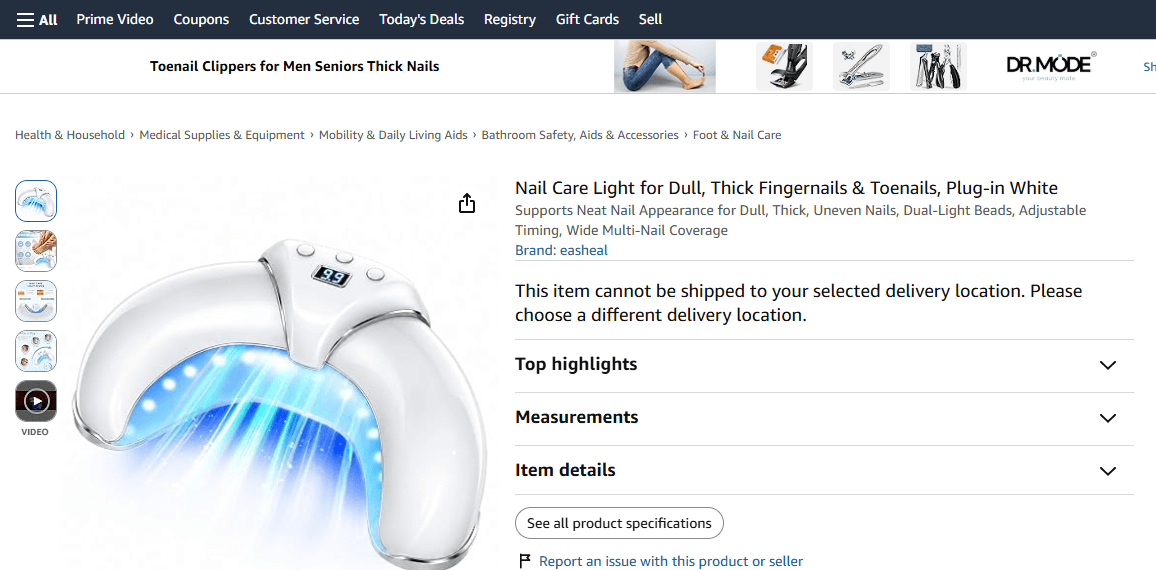
What Is FungaBeam?
FungaBeam is marketed as an at-home light therapy device intended for people concerned about thick, yellow, discolored, or brittle fingernails and toenails. The official store describes a USB-powered device using 470-nanometer blue light and 910-nanometer near-infrared light, with 18 LEDs and a claimed 90-second daily treatment session. These specifications are manufacturer claims rather than independently verified performance results.
The product appeals to customers who want a convenient, drug-free alternative to prescription medication or repeated visits to a clinic. However, convenience alone does not establish that a device can eliminate a fungal infection.
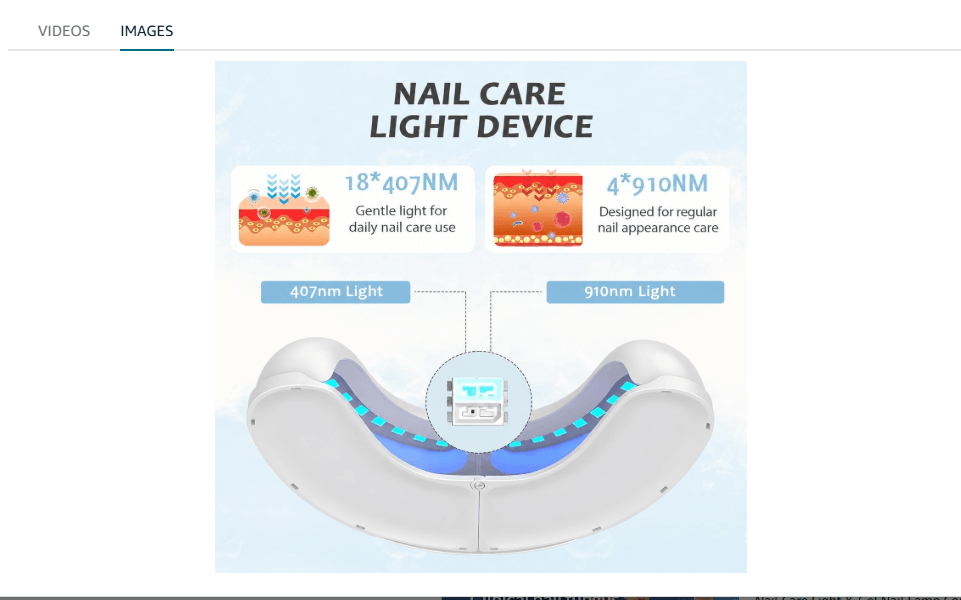
FungaBeam Specifications and Pricing
| Feature | Advertised details |
|---|---|
| Product type | At-home nail light therapy device |
| Light technology | Blue and near-infrared LEDs |
| Wavelengths | 470 nm and 910 nm, according to the seller |
| LED count | 18 |
| Power | Advertised as 36 watts |
| Treatment time | Approximately 90 seconds daily |
| Power source | USB |
| Advertised starting price | $34.99–$49.99, depending on the offer |
| Return policy | Advertised 30-day money-back guarantee |
Prices and offers may change. The official store’s guarantee requires the device to be returned before the purchase price is refunded, so customers should check shipping costs, return instructions, and all applicable terms before ordering.
Does FungaBeam Really Work for Nail Fungus?
The central concern is that there is insufficient independent clinical evidence to establish that FungaBeam cures nail fungus or prevents it from returning.
The seller claims its combination of blue and near-infrared light targets fungi beneath the nail plate. However, the product information reviewed does not provide convincing independent clinical trial results demonstrating that this particular device reliably eradicates fungal infections.
Light-based treatments for nail fungus are an area of medical research, but the existence of legitimate light-treatment technology does not prove that every consumer device is effective. The British Association of Dermatologists’ 2026 guidance states that evidence is insufficient to recommend laser monotherapy for fungal nail infections. The US Food and Drug Administration also distinguishes devices intended to improve the appearance of clear nail from devices proven to treat the underlying infection.
Consequently, customers should not interpret FungaBeam’s advertised technology as proof of a cure.
FungaBeam Reviews: What Are Customers Saying?
The official FungaBeam store displays positive testimonials and claims thousands of customer reviews. These are seller-published figures and testimonials; they should not automatically be treated as independently verified evidence.
An October 2026 ScamAdviser investigation of a separate FungaBeam sales domain reported no independent Trustpilot reviews at the time of its assessment. The investigation also questioned the product’s promotional urgency and medical endorsements. This finding applies to the specific sales website investigated and should not be generalized to every site using the FungaBeam name.
A Better Business Bureau Scam Tracker report also describes one consumer’s experience ordering a FungaBeam-branded product, including concerns about the packaging and the payment recipient. This is an individual consumer report, not an independently adjudicated finding that every FungaBeam seller is fraudulent.
The available information does not establish a dependable, independently verified success rate for the device.
Major Red Flags to Consider
1. Strong medical claims without adequate product-specific evidence
Promises to permanently eliminate fungus or prevent recurrence require strong clinical evidence. The reviewed product materials do not establish that FungaBeam can consistently deliver those outcomes.
2. Urgency-based marketing
A security review reported countdown timers, limited-stock messaging, and claims of television-network exposure on one FungaBeam sales page. Such marketing tactics can pressure customers to purchase before investigating the product.
3. Medical endorsements that are difficult to verify
The same investigation questioned the authenticity or verifiability of medical endorsements on the sales page. Buyers should seek full names, professional credentials, and verifiable evidence before relying on claimed medical recommendations.
4. Limited independent customer feedback
Positive testimonials on a seller’s website are not equivalent to independently collected reviews. The lack of a robust external review history makes it harder to assess durability, customer support, and actual treatment outcomes.
5. Refund conditions
Although the official store advertises a 30-day guarantee, the device must be returned to obtain the advertised refund. Customers should confirm the return address, shipping costs, refund timing, and eligibility requirements before paying.
Is FungaBeam Safe?
The available information is insufficient to establish the safety of FungaBeam for every user or to verify its regulatory status. Buyers should not assume that a product is medically approved simply because it uses LED light or appears on a professional-looking website.
People with diabetes, poor circulation, reduced sensation, compromised immunity, or significant nail changes should seek medical advice before attempting home treatment. These conditions can make foot problems more consequential.
It is also important to confirm the diagnosis. Nail psoriasis, injuries, and other nail conditions can resemble fungal infections. The American Academy of Dermatology explains that clinicians may examine nail samples to confirm fungus before selecting treatment.
Better-Supported Alternatives for Nail Fungus
Treatment depends on the severity of the infection, the patient’s health, and the type of fungus involved.
- Prescription topical antifungals: Certain medications are approved for nail fungus and may be suitable for selected cases, although treatment can take many months.
- Prescription oral antifungals: A clinician may recommend oral terbinafine or another appropriate medication after evaluating the patient, potential interactions, and relevant safety considerations.
- Professional assessment: A dermatologist or podiatrist can help confirm the diagnosis and explain realistic treatment expectations.
The American Academy of Dermatology notes that toenails grow slowly, so complete visible recovery may take a year or longer, even when treatment successfully clears the infection.
Frequently Asked Questions About FungaBeam
Is FungaBeam a scam?
The available evidence does not conclusively prove that every FungaBeam-branded product or seller is fraudulent. However, the product’s treatment claims, limited independent evidence, and concerns about certain sales pages justify caution.
Is FungaBeam FDA-approved?
I could not verify FDA clearance for the specific FungaBeam device from the sources reviewed. FDA-cleared devices in the broader laser category may be indicated for temporary improvement in the appearance of clear nail, which is not the same as proving a fungal infection has been cured.
How long does FungaBeam take to work?
The seller describes a treatment routine lasting 90 seconds daily and suggests that visible improvement may take weeks or months. Those are promotional expectations, not independently established results for this device. Healthy nail growth is slow, and the timeline varies by person.
Can FungaBeam permanently remove nail fungus?
There is insufficient reliable evidence to conclude that FungaBeam permanently eliminates nail fungus or prevents recurrence.
Should I buy FungaBeam?
If your goal is to treat a suspected fungal infection, seek a confirmed diagnosis and compare evidence-based treatments before spending money on an unproven device.
Final Verdict: Is FungaBeam Worth Buying?
FungaBeam offers a convenient at-home light therapy concept, but its advertised specifications and positive testimonials do not establish that it effectively cures nail fungus. The lack of convincing independent product-specific clinical evidence, questions raised about sales tactics, and uncertainty around real-world results are significant drawbacks.
Our recommendation is to approach FungaBeam cautiously and not rely on it as a proven treatment for nail fungus. Before purchasing, verify the seller’s identity, read the complete return policy, and look for independent clinical evidence relating to the exact device. If you have discolored or thickened nails, consult a qualified healthcare professional about diagnosis and treatments supported by medical evidence.

Nikhil Sharma is the author and researcher behind Review Trails, where he shares shopping website reviews, product insights, and scam or legit website analysis. He focuses on providing honest, easy-to-understand information that helps readers make safer and smarter online purchasing decisions.