
If your doctor has recommended an iRhythm Zio heart monitor, you may be wondering whether the company is trustworthy. Questions about medical bills, customer service, patient privacy and device reliability can understandably make people cautious.
The first thing to know is that iRhythm Technologies is a real medical technology company. Its Zio heart-monitoring system is used by healthcare professionals to record heart rhythms and help identify irregularities that may otherwise be difficult to detect. However, being a legitimate company does not mean it has an unblemished record.
iRhythm has faced regulatory scrutiny over certain device claims and confirmed a cybersecurity incident involving patient information in 2026. These issues deserve a closer look.
This review examines what iRhythm does, the FDA warning letter, the data breach, billing concerns, and what patients should consider before using its services.
What Is iRhythm Technologies?
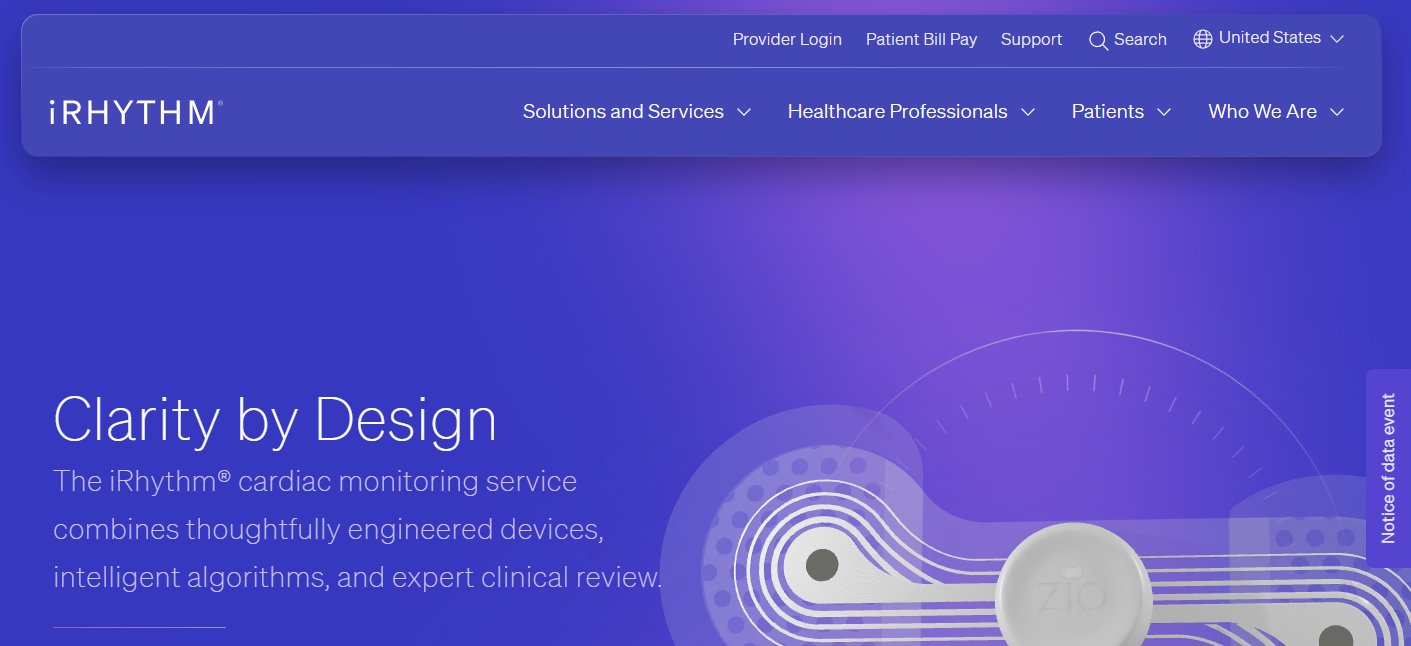
iRhythm Technologies is a medical technology company that specialises in ambulatory cardiac monitoring. It is publicly traded on Nasdaq under the ticker symbol IRTC and is best known for its Zio range of wearable heart monitors.
The Zio patch is designed to record electrical activity from the heart over an extended period while a patient continues with many normal daily activities. A healthcare professional may recommend this type of monitoring when someone experiences symptoms such as palpitations, dizziness or fainting, or when an irregular heartbeat is suspected but may not appear during a brief office-based ECG.
The recorded data is analysed to help clinicians identify abnormal heart rhythms and decide whether further evaluation is needed.
The monitor is not a smartwatch that necessarily provides immediate alerts for every dangerous event. Its capabilities depend on the particular model and service prescribed.
The key distinction: iRhythm is a genuine medical technology provider. The more relevant questions concern how it communicates device limitations, protects patient information and handles customer concerns.
The iRhythm Data Breach: What Happened?
One of the most significant concerns involving iRhythm is a cybersecurity incident that occurred in June 2026.
According to reporting by Recorded Future News on October 9, 2026, iRhythm disclosed that a cyberattack affected patient information held in third-party systems. State breach notifications identified at least 360,000 affected individuals in Texas and South Carolina alone, with additional notifications reported elsewhere. The full number of affected people was not established in that report.
The incident involved unauthorised access to third-party-hosted business applications, rather than a reported compromise of the company’s medical devices themselves. iRhythm said the incident did not affect its medical-device systems, clinical operations, manufacturing or distribution.
What does this mean for patients?
A breach involving health-related information can increase the risk of convincing phishing attempts or identity fraud. Someone who knows that you received cardiac monitoring services may try to impersonate a healthcare provider, insurer or billing representative.
If you receive a message about your Zio monitor or an outstanding balance, do not assume it is genuine just because it includes accurate personal details.
Practical precautions include:
- Verify unexpected calls using contact details from official paperwork or the company’s official website.
- Avoid sharing passwords, verification codes or payment information with unsolicited callers.
- Review insurance statements and other relevant accounts for activity you do not recognise.
- If you receive a formal breach notification, follow its specific instructions and consider the protective steps it recommends.
A confirmed data breach is a serious concern, but it does not automatically mean every affected person has experienced identity theft. It is important to distinguish between information being exposed and evidence that the information has subsequently been misused.
The FDA Warning Letter: Why Was iRhythm Investigated?
On May 25, 2023, the US Food and Drug Administration issued a warning letter to iRhythm concerning its Zio AT cardiac-monitoring system. The letter identified concerns about marketing claims, device limitations and quality-control procedures.
One important issue was how the system was described for monitoring higher-risk patients. The FDA said certain marketing materials suggested near-real-time monitoring and immediate notifications, even though the device’s existing clearance did not cover the expanded intended use described in those materials.
The agency warned that delayed reporting could pose risks if the device were used for patients who required timely intervention for potentially life-threatening arrhythmias.
The letter also discussed problems involving event transmission, complaint handling and corrective-action procedures. It referenced serious complaints, including reports of arrhythmias that were not reported to physicians.
These findings should not be dismissed. At the same time, the warning letter concerned particular device systems and intended-use claims; it does not prove that every iRhythm product is defective.
The FDA reviewed the company’s subsequent responses and described certain corrective-action responses as adequate, while requesting additional information about other issues.
What should patients take away from this?
Ask your healthcare provider which Zio model you will use and how the results will be delivered. In particular, confirm whether the service provides real-time notifications or whether the results are reviewed after the monitoring period.
Do not assume a wearable monitor replaces emergency medical care. If you develop severe chest pain, fainting, significant breathing difficulty or other potentially urgent symptoms, seek appropriate emergency assistance rather than waiting for a monitor report.
iRhythm Complaints: Billing and Customer Service
Patients sometimes encounter confusion about the cost of medical monitoring services, insurance coverage or the amount they are expected to pay.
The cost of a Zio service can depend on several factors, including the patient’s insurance plan, deductible, network arrangements and the specific service billed. A bill that seems unexpectedly high deserves investigation, but an individual complaint alone does not establish that a company deliberately overcharges every customer.
Before using the service, consider asking:
- Is the monitoring service covered by my insurance?
- Is prior authorisation required?
- What is my estimated out-of-pocket cost?
- Will I receive separate bills for the device, analysis or related services?
- Who should I contact if the insurance payment or final charge appears incorrect?
If you receive a bill you do not understand, request an itemised statement and compare it with your insurer’s explanation of benefits. Ask the billing department to explain any discrepancy and keep copies of correspondence.
These steps can help you identify an insurance-processing issue, a misunderstanding about coverage or a possible billing error.
Is the Zio Heart Monitor a Real Medical Device?
Yes. iRhythm’s Zio monitoring services are genuine medical services used to help clinicians evaluate heart rhythms. Company filings describe a wearable biosensor that records ECG data over an extended period and software that analyses the recordings to support medical review.
However, the precise capabilities depend on the product. A patch intended for ambulatory monitoring should not automatically be treated as equivalent to a hospital telemetry system that delivers continuous, immediate alerts to clinical staff.
The FDA warning letter is an important reminder that intended use, marketing claims and actual device capabilities must align.
If you are uncertain about a prescribed monitor, ask your clinician what it can detect, how quickly results are reviewed, what happens if an abnormal rhythm is identified, and what symptoms require immediate medical attention.
Pros and Cons of iRhythm
Potential advantages
- An established medical technology company with publicly documented operations.
- Wearable monitoring designed to record heart rhythms over an extended period.
- Services that can help clinicians investigate intermittent or difficult-to-detect arrhythmias.
- A real medical monitoring system used in clinical care.
Concerns and limitations
- A documented FDA warning letter concerning certain marketing claims and device-related quality issues.
- A confirmed 2026 cybersecurity incident involving patient information.
- Potential confusion about how quickly monitoring results are reviewed.
- Possible billing and insurance complications.
- The need to verify privacy notifications, service terms and costs.
Is iRhythm a Scam or Legit?
The available evidence does not support describing iRhythm Technologies as a fake company or a business selling a nonexistent medical product. It is a legitimate medical technology provider with real cardiac-monitoring services.
Nevertheless, the company’s record includes significant issues. The FDA’s 2023 warning letter documented concerns about the marketing and intended use of the Zio AT system, while the 2026 cyberattack resulted in unauthorised access to patient information.
These are legitimate reasons to scrutinise the company’s practices. They do not, by themselves, establish that the company is a scam.
Verdict: iRhythm is legitimate, but its regulatory history and confirmed data breach warrant attention. Patients should understand the capabilities of their specific monitor, clarify costs and take any privacy notification seriously.
If a doctor has recommended a Zio monitor, do not abandon medically recommended monitoring solely because of online concerns. Discuss any questions with your healthcare provider and make an informed decision based on your medical needs.
Frequently Asked Questions
1. Is iRhythm a legitimate company?
Yes. iRhythm Technologies is a publicly traded medical technology company that provides cardiac-monitoring services, including the Zio range of wearable monitors.
2. Did iRhythm experience a data breach in 2026?
Yes. Reporting in October 2026 described a cyberattack involving patient information stored in third-party systems. Notifications identified hundreds of thousands of affected individuals, although the total number was not established in the cited report.
3. Did the FDA issue a warning letter to iRhythm?
Yes. The FDA issued a warning letter on May 25, 2023, concerning claims and quality-related issues involving the Zio AT system. The letter should be read in its specific regulatory context.
4. Is the Zio patch safe to use?
Its suitability depends on the specific device, your medical circumstances and your clinician’s judgment. Ask your healthcare provider about its intended use and limitations. Do not treat it as a substitute for emergency care.
5. Can iRhythm detect heart problems?
Zio monitoring services record ECG data that clinicians can review to help identify abnormal heart rhythms. The device does not guarantee that every problem will be detected or that every result will be delivered immediately.
6. What should I do if I receive an iRhythm data-breach notice?
Read the notice carefully, follow its recommendations and be alert to suspicious communications. Verify any unexpected request for personal information through independently confirmed contact details.
7. What if I think my iRhythm bill is wrong?
Request an itemised bill, compare it with your insurer’s explanation of benefits and contact the billing department for clarification. Keep written records of any dispute.
Final Verdict
iRhythm is a real medical technology company, not an obvious scam. Its Zio monitors are used to support the evaluation of heart rhythm abnormalities, but the company has faced documented regulatory scrutiny and a serious cybersecurity incident involving patient information.
For patients, the sensible approach is to verify the specific service being prescribed, understand how and when results are reviewed, confirm the expected cost and follow any official privacy notifications.
Trust in a healthcare provider should be based on transparent information and accountability—not simply on the fact that a company exists or that its product is used in medical care.

Nikhil Sharma is the author and researcher behind Review Trails, where he shares shopping website reviews, product insights, and scam or legit website analysis. He focuses on providing honest, easy-to-understand information that helps readers make safer and smarter online purchasing decisions.