
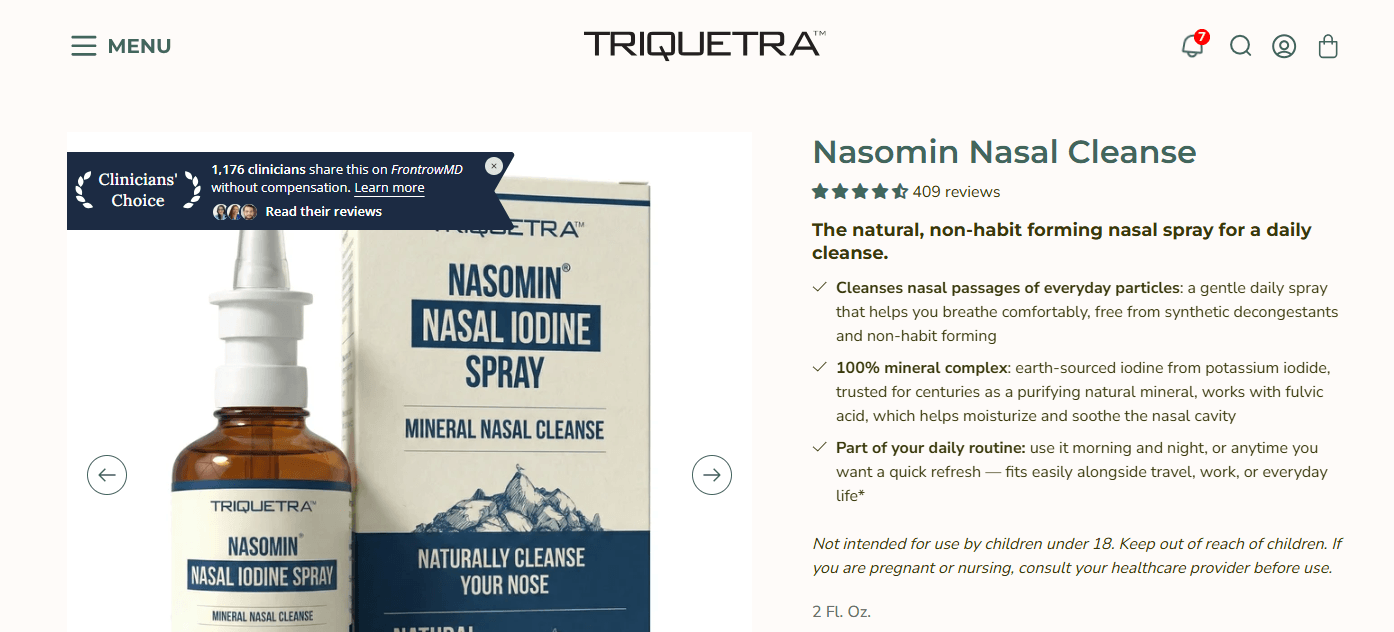
Nasomin Nasal Spray is marketed as an iodine-based nasal antiseptic containing potassium iodide and fulvic acid. It is different from conventional saline nasal sprays, which use salt water to moisturise the nasal passages and loosen mucus.
The key point in this review is that Nasomin is marketed for nasal cleansing and germ control, but its promotional claims should not be confused with proof that it prevents or treats respiratory infections. There is limited independent clinical evidence establishing the safety and effectiveness of this specific product for those purposes.
Overall verdict: Nasomin may interest people looking for an iodine-based nasal product, but I would not recommend treating it as a proven way to prevent colds, flu or other infections. Check the ingredients, directions and safety information with a healthcare professional before using it.
Product identity matters: This review covers Nasomin® Nasal Iodine by Triquetra Health, not Nasomist, a similarly named saline nasal spray sold in India. They are different products.
What Is Nasomin Nasal Spray?
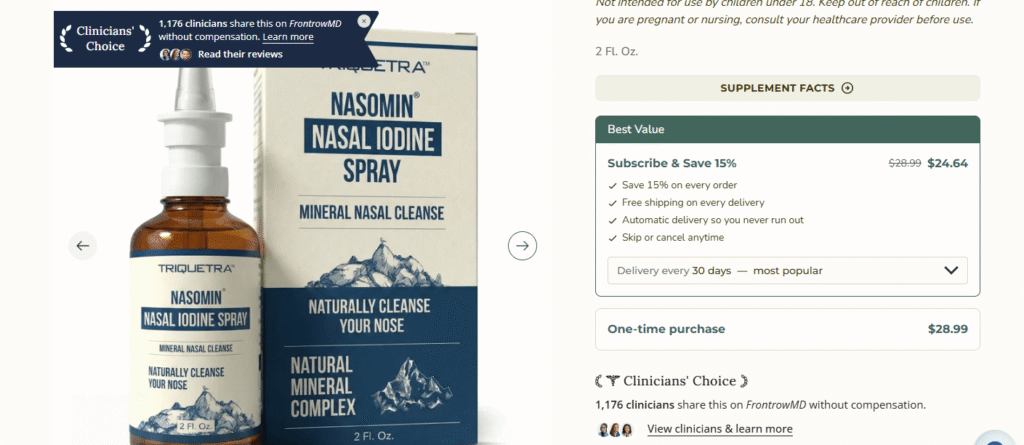
Nasomin is marketed as a nasal antiseptic spray designed to cleanse the nasal passages. The product is associated with Triquetra Health and is sold in a 2-fluid-ounce bottle.
Unlike ordinary saline sprays, Nasomin’s listed active ingredients are potassium iodide and fulvic acid. Its marketing focuses on nasal hygiene and reducing germs in the nose.
The manufacturer promotes it as a product for people concerned about exposure to germs, particularly during cold and flu seasons. However, marketing statements are not the same as clinical proof that using the spray prevents illness.
The two ingredients highlighted in the product listing are:
Potassium Iodide
Potassium iodide is an iodine-containing compound. Iodine compounds have antimicrobial applications in certain healthcare and antiseptic settings.
However, the presence of iodine does not automatically establish that a particular nasal formulation is safe or effective for repeated use inside the nose.
The concentration, formulation, exposure and intended application all matter.
Fulvic Acid
Fulvic acid is a group of organic compounds associated with decomposed organic matter. It is used in some mineral and wellness products.
Nasomin combines fulvic acid with potassium iodide, but there is insufficient independent clinical evidence to establish that this particular combination provides meaningful protection against respiratory infections when sprayed into the nose.
The listed ingredients should always be checked against the bottle you receive, as product formulations can change.
Potential Benefits of Nasomin Nasal Spray
The product is promoted for nasal cleansing and antimicrobial support. It is important to distinguish the intended benefits from benefits that have actually been demonstrated in clinical studies of Nasomin itself.
Nasal Hygiene
Nasomin is marketed as a nasal cleansing product. Its spray format allows the solution to be applied directly inside the nasal passages.
However, it should not automatically be considered equivalent to a saline rinse or a medically established nasal treatment.
Antimicrobial Activity
Iodine compounds are known for their antimicrobial properties in certain applications. This is the basis for Nasomin’s germ-control marketing.
But laboratory antimicrobial activity does not necessarily translate into preventing infections in people. Evidence specific to Nasomin is needed before making that conclusion.
Convenient Application
The spray bottle is designed for direct nasal application. This may make it convenient to use compared with some other nasal hygiene products.
Convenience, however, does not establish medical effectiveness.
Does Nasomin Really Kill Germs and Prevent Infections?
This is the most important question when evaluating the product.
Iodine-based antiseptics have antimicrobial properties, but three things should be considered:
-
Laboratory results do not automatically prove effectiveness in humans.
-
Results from one iodine formulation cannot automatically be applied to another.
-
Reducing germs temporarily does not necessarily prevent someone from becoming infected.
There have been clinical studies of a different nasal iodine product called Nasodine, which contains 0.5% povidone-iodine. Those studies cannot be used as proof that Nasomin, which lists potassium iodide and fulvic acid, produces the same results.
My assessment: Nasomin’s germ-control claims remain insufficiently established by independent clinical evidence specific to this product.
How to Use Nasomin Nasal Spray
Always follow the instructions printed on the product packaging.
General precautions for nasal sprays include:
-
Check the bottle’s ingredients and expiry date.
-
Read the manufacturer’s application instructions.
-
Avoid sharing the spray bottle with other people.
-
Do not allow the nozzle to become contaminated.
-
Stop using it if you experience significant irritation.
Do not increase the frequency of application simply because you are concerned about exposure to germs.
I would not recommend assuming that Nasomin is suitable for unlimited daily use just because its marketing describes it as safe for daily use.
Possible Side Effects and Safety Concerns
Nasomin contains potassium iodide, so iodine exposure deserves attention.
Possible concerns include:
-
Nasal irritation or discomfort
-
Burning or stinging sensations
-
Sensitivity or allergic reactions
-
Potential thyroid-related concerns with excessive iodine exposure
People with thyroid disorders, kidney problems or known iodine sensitivity should seek medical advice before using iodine-containing products.
The National Institutes of Health explains that excessive iodine intake can affect thyroid function, particularly in susceptible individuals. The FDA also identifies precautions associated with potassium iodide use.
Nasomin Nasal Spray Price and Availability
Nasomin is listed by international retailers, including sellers offering delivery to India.
One Indian retailer listing showed a price of approximately ₹3,576, while another listing displayed ₹4,839. These are retailer-specific prices and may change with availability, shipping and import charges.
-
Whether the seller is authorised.
-
Whether the product is sealed and within its expiry date.
-
Whether the ingredients match the manufacturer’s listing.
-
Whether import and delivery charges are included.
-
Whether the product is permitted for import and sale in your location.
Pros and Cons of Nasomin Nasal Spray
Pros
-
Spray format allows direct nasal application.
-
Contains two clearly identified headline ingredients.
-
Uses iodine, an ingredient with established antimicrobial applications in other formulations.
-
May appeal to consumers interested in nasal hygiene products.
Cons
-
Limited independent clinical evidence specific to Nasomin.
-
Its infection-prevention claims are not established.
-
Iodine exposure requires consideration of thyroid health.
-
Not interchangeable with ordinary saline nasal sprays.
-
International pricing can make it relatively expensive.
Who Should Consider Nasomin?
Nasomin may interest adults researching iodine-based nasal hygiene products, but it is important to discuss its suitability with a healthcare professional.
It is not my first recommendation for people simply looking for relief from:
-
A blocked nose
-
Dry nasal passages
-
Thick mucus
-
Seasonal allergy symptoms
A conventional saline nasal spray is generally a more straightforward option for moisturising nasal passages and loosening mucus.
People with thyroid conditions, kidney disease, pregnancy or breastfeeding considerations should seek professional advice before using an iodine-based nasal product.
Frequently Asked Questions
Is Nasomin a saline nasal spray?
No. Nasomin is marketed as an iodine-based nasal spray containing potassium iodide and fulvic acid. Saline sprays generally contain sodium chloride and water.
Does Nasomin prevent colds and flu?
There is insufficient independent clinical evidence to establish that Nasomin prevents colds, influenza or other respiratory infections.
Does Nasomin contain iodine?
Yes. Its listed ingredients include potassium iodide, an iodine-containing compound.
Can Nasomin be used every day?
The product is marketed for daily use, but this does not establish that prolonged use is appropriate for everyone. Follow the product instructions and consult a healthcare professional.
Is Nasomin the same as Nasomist?
No. Nasomin is marketed as an iodine nasal spray, whereas Nasomist is a different product containing sodium chloride 0.65% in commonly available Indian listings.
Is Nasomin available in India?
Some Indian online retailers list it, although availability, pricing and import conditions may vary.
Final Verdict: Is Nasomin Nasal Spray Worth Buying?
Nasomin Nasal Spray is an iodine-based nasal hygiene product that combines potassium iodide and fulvic acid. Its main selling point is its proposed antimicrobial action inside the nasal passages.
However, the available product information does not establish that it reliably prevents respiratory infections or provides clinically proven protection against germs. Research involving other iodine nasal sprays should not be treated as direct evidence for Nasomin.
Final recommendation: If you want a basic nasal spray for dryness or congestion, a conventional saline product is a more established and practical choice. If you are considering Nasomin specifically for antimicrobial protection, discuss the product with a healthcare professional before purchasing or using it.

Nikhil Sharma is the author and researcher behind Review Trails, where he shares shopping website reviews, product insights, and scam or legit website analysis. He focuses on providing honest, easy-to-understand information that helps readers make safer and smarter online purchasing decisions.