
The name True Vision Glasses may sound like a modern eyewear brand, but the term actually has a documented history going back more than 100 years. Newspaper advertisements from the early 1920s promoted “True Vision” spectacles through the Chicago Spectacle House, offering readers a free trial and making unusually broad claims about what the glasses could do.
Historical evidence shows that the advertisements were real. What the advertisements do not establish is that the glasses could actually deliver all of the vision and health benefits being promoted.
That distinction is important if you encountered the term True Vision Glasses in a modern video or online post. The historical product should not automatically be confused with modern TruVision reading glasses, night-driving glasses or other products using similar names.
True Vision Glasses: Quick Facts
| Detail | What the evidence shows |
|---|---|
| Name | “True Vision Glasses” / “True Vision” spectacles |
| Historical period | At least 1920–1921 |
| Seller in historical ads | Chicago Spectacle House |
| Historical address | Madison Street, Chicago, Illinois |
| Product type | Eyeglasses/spectacles |
| Advertised material | 10-karat gold-filled frames |
| Historical offer | 10-day free trial |
| Advertised trial price | Around $2.05–$2.95 depending on advertisement |
| Historical claims | See near and far, read fine print, reduce eye strain/headaches |
| Current official seller | Not independently established |
| Modern products with similar names | Yes |
| Evidence for historical medical claims | Advertising claims, not modern clinical evidence |
What Were True Vision Glasses?
Historical advertisements identify True Vision Glasses as spectacles sold through the Chicago Spectacle House.
An advertisement published in May 1921 invited readers to request a pair of large-size “True Vision Glasses” without paying upfront. The glasses were sent by prepaid parcel post for a 10-day trial. Customers who wanted to keep them were then expected to pay $2.95; otherwise, they could return them.
Other advertisements from the same period describe the glasses as 10-karat gold-filled and say they came with a velvet-lined spring-back spectacle case.
This makes one thing clear:
True Vision Glasses were not invented by a modern social-media seller. The name appeared in genuine historical mail-order advertising.
What Did the Original Advertisements Claim?
The advertising was much more ambitious than simply saying the glasses were attractive or inexpensive.
The Chicago Spectacle House advertisements said the glasses would enable customers to read very small print, thread a fine needle, see clearly at a distance or close up, and use them under daylight or lamplight. One advertisement also claimed they could prevent eye strain and headaches.
Another 1921 advertisement told readers that they would be “amazed and delighted” after trying the spectacles and emphasized that they could be used for both close and distant vision.
These statements should be understood as historical advertising claims.
They are not the same thing as evidence from controlled optical testing or modern clinical research.
Was the Free Trial Real?
Yes, the historical newspapers provide strong evidence that the free-trial offer was actually advertised.
Multiple newspapers carried versions of the Chicago Spectacle House offer. The advertisements instructed readers to send their name, address, age and information about how long they had worn glasses. The company would then send the spectacles without upfront payment.
The trial period was generally described as 10 days.
One March 1920 advertisement even reproduced a coupon stating that the customer could try the gold-filled True Vision spectacles for 10 days and only pay if they decided to keep them.
The exact advertised price changed between advertisements. Some versions mention $2.05, while later advertisements list $2.95.
Were True Vision Glasses a Scam?
It would be inaccurate to make a definitive modern claim that the historical company was a “scam” based solely on these advertisements.
The advertisements themselves are independently documented in historical newspaper archives. That establishes that the offer existed.
What is much harder to establish is whether the spectacles actually delivered the sweeping benefits claimed in the advertisements.
A historical medical publication is particularly interesting here. A discussion in the Nova Scotia Medical Bulletin reproduced the mail-order spectacle advertising and quoted the claim that True Vision glasses could enable people to read tiny print, see far or near and prevent eye strain or headaches. The publication presented the material in a skeptical context concerning mail-order spectacles.
That does not prove that every pair was defective or that customers received nothing.
It does show that the extravagant claims were recognizable as mail-order advertising claims rather than established medical conclusions.
Could One Pair of Glasses Let Everyone See Near and Far?
This is where the historical advertising deserves skepticism.
People have different refractive errors and different optical requirements. Modern prescription eyewear is normally based on measurements of an individual’s vision rather than a universal pair of spectacles that supposedly works equally well for everyone.
Modern consumer guidance on buying prescription eyewear likewise emphasizes the importance of having an up-to-date prescription and accurate measurements. Good Housekeeping’s 2026 testing of online eyewear retailers involved licensed opticians reviewing prescription accuracy and specifically noted that complex prescriptions can benefit from in-person fitting.
That modern evidence does not directly test the 1920s True Vision glasses.
It does, however, provide useful context: a historical claim that one standardized pair could let essentially anyone see both near and far should not be interpreted as equivalent to individualized modern prescription correction.
True Vision Glasses vs. Modern TruVision Products
Another potential source of confusion is the spelling.
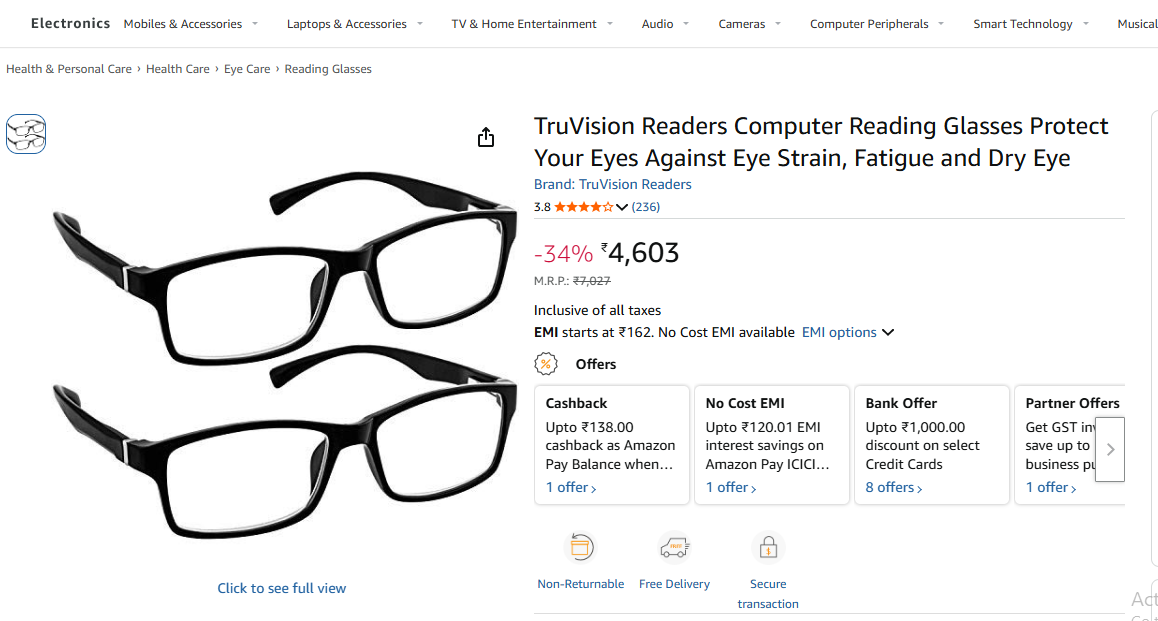
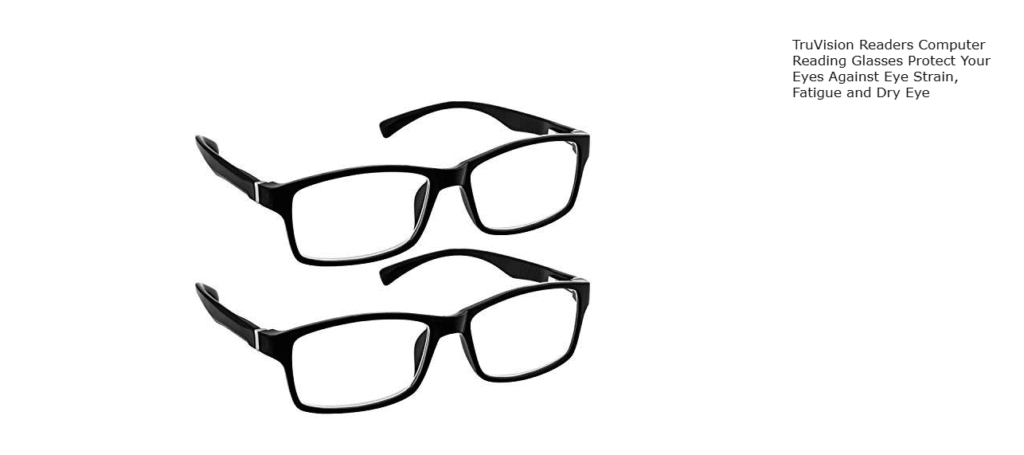
Today there are products sold under names such as TruVision Readers, while X Power Eyewear uses “X Power True Vision” as a name for its yellow-tinted night-driving lens technology. These are modern products and should not automatically be connected to the historical Chicago Spectacle House product.
For example, current TruVision Readers are ordinary over-the-counter reading glasses available in different magnification strengths. One current listing identifies a 1.5-diopter model and reports hundreds of customer reviews.
X Power’s current “True Vision” terminology refers to its yellow night-driving lenses, including products advertised with UV400 and ANSI Z87+ specifications.
Neither should be assumed to be the same product as the 1920s True Vision Glasses.
Why the Historical Story Is Interesting
The True Vision story is a good example of how old mail-order advertising resembles some modern online product marketing.
The historical advertisements used:
- a free-trial offer;
- strong benefit claims;
- an attractive product description;
- a limited decision period;
- a low final purchase price;
- direct mail ordering; and
- testimonials implied through persuasive advertising language.
The technology and sales channels are obviously different from today’s ecommerce market, but the basic marketing strategy—demonstrate a remarkable benefit, remove the upfront purchasing barrier and encourage the reader to try the product—is recognizable.
That does not mean modern promotional offers are automatically deceptive.
It simply shows why product claims should be separated from independently verifiable evidence.
What Evidence Exists for True Vision Glasses?
The strongest evidence available today is historical rather than clinical.
Confirmed
Historical newspaper archives document advertisements for True Vision spectacles from the Chicago Spectacle House during the early 1920s.
The advertisements offered a 10-day trial and described the spectacles as 10-karat gold-filled.
Different advertisements listed slightly different prices, including $2.05 and $2.95.
Historical claim, not independently established
The advertisements claimed the glasses could improve the ability to see near and far, read fine print and avoid eye strain and headaches.
Not established
There is no evidence in the sources reviewed here that the historical True Vision spectacles were clinically demonstrated to provide all of those claimed benefits.
Is There a Current True Vision Glasses Website?
The available search results do not establish a single current official website that can confidently be identified as the successor to the original Chicago Spectacle House True Vision product.
That is important.
If you saw True Vision Glasses in a current advertisement, the exact URL or seller matters. A modern website using the same or a similar name could be completely unrelated to the historical product.
Before purchasing, check:
- the exact domain name;
- the business’s legal identity;
- whether the glasses are prescription or non-prescription;
- lens power;
- return policy;
- customer-service details;
- independent reviews; and
- whether medical claims are supported by current evidence.
Pros and Cons of the Historical Offer
Pros
- The historical advertisements are independently documented.
- A 10-day trial was repeatedly advertised.
- The spectacles were marketed as gold-filled.
- The price was relatively low by the standards of the period.
- Customers were offered an opportunity to test the product before deciding whether to keep it.
Cons
- The advertisements made very broad vision-related claims.
- Those claims were promotional rather than modern clinical evidence.
- A standardized pair of spectacles cannot automatically be assumed to meet every person’s optical needs.
- The original business is historical rather than a currently verified retailer.
- Modern products using “True Vision” or “TruVision” terminology may be unrelated.
FAQs
Are True Vision Glasses real?
Yes, the name is historically documented. Newspapers from the early 1920s contain advertisements for “True Vision” spectacles sold through the Chicago Spectacle House.
When were True Vision Glasses sold?
The advertisements reviewed here date from at least 1920 through 1921.
Were True Vision Glasses free?
They were advertised as a 10-day free trial. Customers who decided to keep the glasses were then expected to pay the advertised price.
Did they really prevent headaches and eye strain?
That was an advertising claim. The historical sources establish that the claim was made, but they do not establish it as a clinically proven benefit.
Are today’s TruVision Readers the same thing?
Not necessarily. Modern TruVision Readers are currently sold as over-the-counter reading glasses and are a separate modern product line.
Are X Power “True Vision” glasses the same product?
No evidence reviewed here establishes a connection. X Power currently uses “True Vision” as part of its branding for yellow night-driving lenses.
Final Verdict
The True Vision Glasses story is real, but it is primarily a historical eyewear story, not evidence that a modern miracle pair of glasses can correct everyone’s vision.
Historical newspapers provide strong documentation that the Chicago Spectacle House advertised True Vision spectacles in the early 1920s. The advertisements offered 10-day trials and promoted gold-filled frames while making broad claims about seeing near and far, reading fine print and preventing eye strain and headaches.
The important distinction is between what the advertisement claimed and what has actually been demonstrated.
The sources reviewed do not provide modern clinical evidence validating the historical product’s broad medical claims. A medical publication from the period even reproduced the mail-order claims in a skeptical discussion of spectacles.
There is also no reliable basis for assuming that modern products called TruVision Readers or products using “X Power True Vision” are descendants of the historical Chicago Spectacle House product.
Bottom Line
True Vision Glasses were a real historical mail-order spectacle product, but their impressive vision and health claims should be treated as advertising claims rather than proven medical facts.
If the term appeared in a modern video or advertisement, the safest next step is to identify the exact current seller and product URL before deciding whether it is connected to the historical True Vision glasses or is simply using a similar name.

Nikhil Sharma is the author and researcher behind Review Trails, where he shares shopping website reviews, product insights, and scam or legit website analysis. He focuses on providing honest, easy-to-understand information that helps readers make safer and smarter online purchasing decisions.