
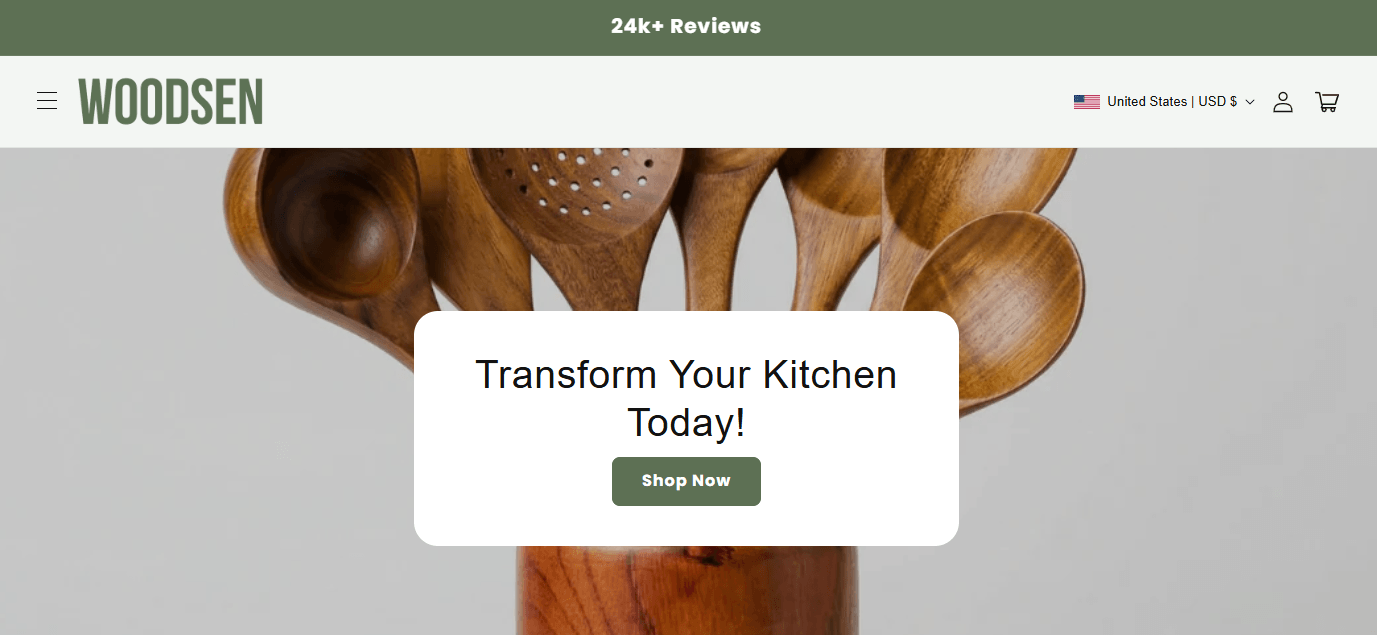
Woodsen Acacia Wood Utensils appear to be a genuine kitchenware product made from acacia wood, with a strong emphasis on natural materials and a lifetime guarantee. The company’s current 7-piece set is listed at about $99.95, compared with a displayed $199.95 regular price, and the product page reports a 4.7/5 rating from more than 24,000 customers.
The bigger question is whether Woodsen’s marketing claims are as strong as they sound. Acacia and other suitable hardwoods can be used for food-contact utensils, and scientific research does not support the simplistic idea that wooden utensils are automatically unhygienic. However, claims that Woodsen utensils eliminate “toxins,” prevent microplastic exposure, or naturally kill bacteria at a specific rate should be treated as marketing claims unless supported by the underlying laboratory reports.
Overall, Woodsen looks more like a premium wooden-utensil brand than an obvious scam, but its relatively high price makes it worth comparing the actual construction, finish, care requirements and warranty before buying.
Woodsen Acacia Utensils at a Glance
| Factor | What we found |
|---|---|
| Product | Woodsen Acacia Wood Utensil Set |
| Main material | Acacia wood, according to seller |
| 7-piece set price | About $99.95 at time checked |
| Displayed comparison price | $199.95 |
| Seller rating | 4.7/5 from 24,241+ customers on product page |
| Warranty | Lifetime guarantee advertised |
| Construction claim | Solid acacia / handcrafted |
| Finish claim | No coating / no added toxins |
| Food-safety evidence | Acacia is a plausible food-contact hardwood, but Woodsen-specific laboratory documentation was not independently verified |
| Main concern | Strong health/safety marketing claims and premium price |
| Overall assessment | Plausible real product; verify claims before paying a premium |
What Are Woodsen Acacia Wood Utensils?
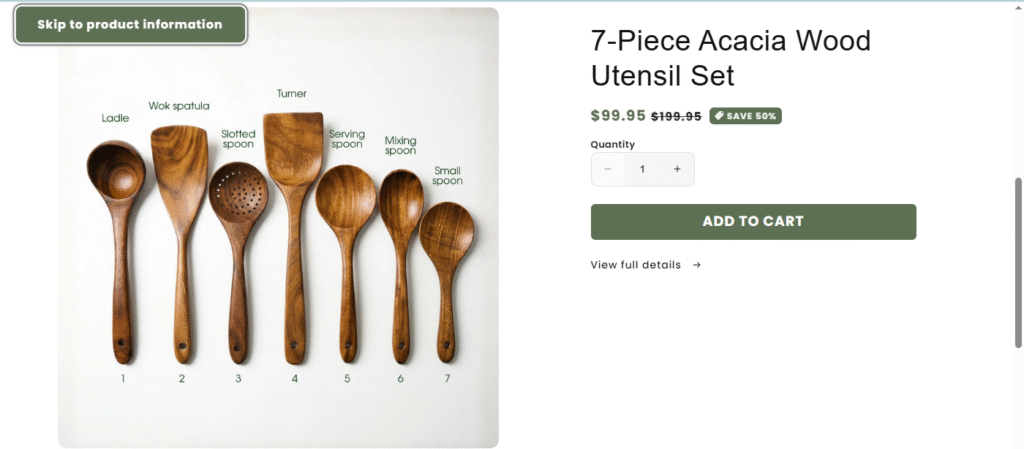
Woodsen sells kitchen utensils made from what it describes as small-leaf acacia wood. Its current collection includes 4-piece, 7-piece and 10-piece acacia utensil sets, as well as teak versions and a wooden utensil holder.
The 7-piece acacia set is marketed as a premium alternative to plastic, silicone and other wooden utensils. Woodsen says the pieces are made from solid acacia, are handcrafted, won’t scratch non-stick cookware and are covered by a lifetime guarantee.
The product therefore fits a familiar kitchen category: wooden spoons and spatulas designed for everyday cooking, especially with cookware that can be scratched by metal utensils.
What Does Woodsen Claim?
Woodsen makes several prominent claims about its acacia utensils.
The company says the set is:
- 100% natural acacia wood
- Free from coatings
- Free from glue
- Free from hidden toxins
- Naturally antimicrobial
- Water-resistant
- Suitable for non-stick cookware
- Handcrafted
- Covered by a lifetime warranty
The product page also says Woodsen has conducted third-party laboratory testing and describes the utensils as meeting FDA food-contact standards.
Those claims sound reassuring, but they should be separated into two categories.
Material/construction claims can potentially be verified through the product itself or documentation.
Health claims require considerably more evidence.
For example, saying a utensil is made from solid acacia is very different from saying that using it prevents exposure to harmful chemicals or microplastics.
Is Acacia Wood Safe for Cooking?
Generally, properly made wooden cooking utensils can be appropriate for food contact.
The FDA Food Code permits hard maple or an equivalently hard, close-grained wood for certain utensils such as rolling pins, salad bowls and chopsticks. The FDA’s guidance focuses on the characteristics of the wood and food-contact surface rather than declaring every individual wood species “FDA approved.”
That distinction is important.
Acacia wood itself should not be described as “FDA approved.”
The FDA regulates food-contact substances and explains that the safety of a food-contact material depends on the individual substances that can reasonably be expected to migrate into food and their authorized conditions of use.
So if Woodsen says its products meet FDA food-contact standards, consumers should ideally look for the actual testing documentation rather than interpreting the statement as an FDA approval of the brand or wood species.
Are Wooden Utensils Actually Hygienic?
This is one area where Woodsen’s marketing needs some context.
It is common to hear that wood is inherently unhygienic because it is porous. But scientific literature is more nuanced.
A peer-reviewed review of research on the microbial safety of wood in contact with food concluded that wood’s porous structure does not automatically make it less hygienic and may sometimes create unfavorable conditions for microorganisms. The review also notes that natural wood can contain antimicrobial components.
Another review examining antimicrobial characteristics of wood found that some wood species demonstrate antimicrobial properties, while also highlighting knowledge gaps and the importance of how antimicrobial activity is actually measured.
That supports a more balanced conclusion:
Wood is not automatically unsafe simply because it is porous, but “wood is naturally antibacterial” should not be interpreted as “wooden utensils never need cleaning.”
Normal cleaning and proper drying still matter.
What About Woodsen’s “99% Bacteria” Claim?
Woodsen’s marketing states that USDA research found small-leaf acacia can reduce bacterial populations by up to 99% within hours without washing.
This is a claim that deserves caution.
Research on acacia extracts or particular acacia species does demonstrate antibacterial activity. For example, a published study found antibacterial effects from Acacia nilotica extracts against E. coli and Salmonella.
But that does not automatically establish that a finished Woodsen utensil made from a particular acacia species will reduce bacteria by 99% during normal kitchen use.
The exact wood species, test method, bacterial strain, exposure time, moisture conditions and surface preparation all matter.
Unless Woodsen publishes the specific laboratory report supporting its particular 99% figure, it is better to regard that number as a company marketing claim rather than an independently established performance specification.
Woodsen and the Microplastics Argument
Woodsen’s sales pages strongly emphasize microplastic concerns.
The company says plastic utensils can shed microplastics into food and presents switching to acacia as a simple way to reduce this exposure.
There is a reasonable basic point here: a solid wooden utensil is not a plastic utensil, so it does not introduce the same type of plastic material into food through ordinary surface wear.
However, that does not prove that using Woodsen utensils will prevent meaningful health problems.
Woodsen’s own marketing sometimes moves from a general material comparison to much stronger language about “toxins” and protecting families. Those broader health implications require substantially more evidence than simply demonstrating that one utensil is made from wood rather than plastic.
Woodsen Reviews: What Customers Say?
The official product page currently displays 4.7/5 from more than 24,000 customers and says 96% recommend the product.
The testimonials shown on the page are overwhelmingly positive.
Customers highlighted in the product material describe:
- Attractive appearance
- Smooth handling
- Durability
- No unusual smell
- Good performance with non-stick cookware
- Ease of cleaning
- Satisfaction with the natural wood construction
One testimonial says the utensils still looked new after almost a year, while another praised their appearance and another specifically mentioned using them with expensive cookware.
However, these are seller-hosted reviews.
A large number displayed directly on a product website should not automatically be treated as equivalent to independently verified reviews from a third-party platform.
That doesn’t mean the reviews are fake. It simply means the review source should be considered when judging the strength of the evidence.
Is Woodsen Worth Nearly $100?
This may be the most practical question.
Woodsen’s 7-piece set currently lists around $99.95, while its 10-piece acacia set is around $149.95.
That is considerably more expensive than many generic acacia utensil sets available through large marketplaces.
The higher price appears to be justified by Woodsen through its branding, claimed material quality, handcrafted construction, third-party testing and lifetime guarantee.
But consumers should decide whether those differences are actually meaningful to them.
If you mainly want wooden spoons that won’t scratch non-stick cookware, much cheaper acacia and other hardwood sets are widely available.
If you specifically value the Woodsen design, warranty and claimed construction standards, paying more may make sense.
A Potential Red Flag: Strong Marketing Language
The Woodsen sales pages use aggressive comparison marketing.
They describe competing plastic, silicone, bamboo and Amazon wooden utensils as containing various problematic materials and suggest that Woodsen is the safer alternative.
Some of these comparisons are presented as broad statements rather than product-specific evidence.
For example, not every bamboo utensil contains formaldehyde glue, and not every wooden utensil sold through Amazon is necessarily lacquer-coated. Likewise, the safety of a silicone product depends on its formulation and intended use.
This doesn’t make Woodsen’s product unsafe.
It simply means consumers should avoid assuming that every competing product is dangerous merely because Woodsen’s marketing says it is.
Pros and Cons
Pros
- Natural hardwood construction
- Designed for non-stick cookware
- Attractive appearance
- Multiple set sizes
- Lifetime guarantee advertised
- Large number of seller-displayed customer reviews
- Wooden utensils have a long history of food-contact use
- No plastic utensil material involved
Cons
- Relatively expensive compared with generic wooden utensils
- Strong health and “toxin-free” marketing claims
- Woodsen-specific laboratory evidence was not independently verified
- “Naturally antimicrobial” does not mean utensils don’t need cleaning
- Official review count is seller-controlled
- Product page contains strong comparisons with competing materials that are not universally applicable
Frequently Asked Questions
Are Woodsen utensils real acacia wood?
Woodsen states that its utensils are made from 100% natural, solid acacia wood and describes the pieces as handcrafted.
Are Woodsen utensils safe?
There is no obvious reason to consider properly manufactured acacia cooking utensils inherently unsafe. FDA guidance allows suitable hard, close-grained wood for certain food-contact utensils. However, the specific finish and manufacturing process matter.
Are Woodsen utensils antibacterial?
Woodsen describes its acacia as naturally antimicrobial. Scientific research does show antimicrobial properties in some woods, but that does not mean a Woodsen utensil should be treated as a substitute for ordinary cleaning and sanitation.
Do Woodsen utensils contain plastic?
Woodsen says the utensils are made from solid acacia and have no added coating or glue. That is a company claim and should be distinguished from independently verified laboratory evidence.
Can Woodsen utensils scratch non-stick pans?
Woodsen specifically markets the utensils as safe for non-stick cookware. Wooden utensils are generally much less likely to scratch non-stick surfaces than metal utensils when used normally.
Are Woodsen utensils dishwasher safe?
Consumers should follow Woodsen’s current care instructions rather than assuming that wooden utensils can be treated like plastic or stainless steel. Prolonged dishwasher exposure can be hard on many wooden kitchen tools, potentially causing drying, cracking or warping.
Is Woodsen a scam?
There is no evidence in the sources reviewed that would justify calling Woodsen a confirmed scam. The company has an active storefront, identifiable products, pricing, warranty claims and substantial seller-displayed customer feedback.
The more relevant question is whether the premium price is justified by the construction and evidence behind the company’s marketing claims.
Final Verdict
Woodsen Acacia Wood Utensils appear to be a legitimate kitchenware product, not an obvious scam. The underlying product category is sensible: properly manufactured hardwood utensils can be useful for everyday cooking and are particularly suitable for cookware that should not be scratched.
The strongest evidence supports the basic concept of wooden food-contact utensils. FDA guidance permits suitable hard, close-grained wood for certain utensils, while scientific reviews indicate that wood is not automatically an unhygienic food-contact material.
Where caution is warranted is in Woodsen’s stronger health and antimicrobial marketing claims.
The company says its acacia is naturally antimicrobial, claims third-party testing, and uses microplastic and “hidden toxins” messaging to distinguish its utensils from competitors. Some of these statements may have a factual basis, but the available evidence does not independently establish every specific claim made on the sales pages.
The product is also relatively expensive compared with generic acacia utensil sets, so buyers should decide whether the Woodsen warranty, design and claimed material/testing standards justify the premium.
Bottom Line
Woodsen Acacia Wood Utensils are a reasonable product to consider if you want premium-looking wooden cooking tools, but you don’t need to believe every health claim in the advertising to appreciate the product.
The safest conclusion is: legitimate-looking kitchenware with a plausible material choice, strong customer feedback on its own site, and some marketing claims that deserve independent verification. If you buy, focus on the actual wood construction, finish, care instructions and warranty rather than assuming that the utensils provide special health protection simply because they are made from acacia.
Don’t Miss: Solippy Loop Hair Remover Review

Nikhil Sharma is the author and researcher behind Review Trails, where he shares shopping website reviews, product insights, and scam or legit website analysis. He focuses on providing honest, easy-to-understand information that helps readers make safer and smarter online purchasing decisions.